Do People Still Use JavaScript in 2026? A Practical Perspective
Is JavaScript still essential in 2026? This guide explains its ongoing ubiquity, how the ecosystem has evolved, and practical steps to stay current for frontend, backend, and beyond.


Yes. JavaScript remains essential for modern software in 2026, powering frontend interfaces, server-side apps with Node.js, and a vast ecosystem of libraries and tooling. Its ubiquity in browsers, the rise of TypeScript, and strong community support keep JavaScript central to modern development.
do people still use javascript in 2026? The short answer is yes. JavaScript remains foundational for the web and beyond. Across millions of projects, from client-side UI to serverless functions, JavaScript powers interactivity, data flows, and automation. According to JavaScripting, the language has maintained its position thanks to broad browser support, a massive ecosystem, and continual improvements in the ECMA-262 standard. For aspiring developers, this means that investing in practical JavaScript skills yields long-term value. In 2026, you can expect JavaScript to underpin not only traditional webpages but also cross-platform tooling and automation pipelines that tie together frontend experiences with back-end services. The key takeaway is that the language itself endures, while the ecosystem around it expands with new tooling and better developer experience.
The frontend reality: browsers, APIs, and evolving capabilities. The frontend landscape remains the most visible facet of JavaScript usage. Modern UIs rely on JavaScript to drive interactivity, manage state, and render dynamic content with frameworks and libraries. Yet the evolution is gradual: browsers expose richer web APIs, performance budgets tighten, and accessibility remains a priority. Developers must stay current with ES features, component architectures, and performance optimization techniques. Even as frameworks shift, vanilla JavaScript continues to empower developers to create resilient, accessible experiences without overreliance on abstractions. This balance between framework-driven productivity and native capabilities is a hallmark of do people still use javascript in 2026.
The server-side story: Node.js, Deno, and beyond. JavaScript has a robust footprint on the server, where Node.js powers APIs, microservices, and serverless functions. This backend role complements its frontend ubiquity, creating a cohesive full-stack environment. While Node.js remains dominant, emerging runtimes and evolving standards push the ecosystem toward better performance, security, and interoperability. For teams, this means leveraging JavaScript across tiers can reduce cognitive load and tooling complexity, provided you follow best practices for modularity, testing, and observability. In short, do people still use javascript is not limited to browsers; it spans the entire software stack.
TypeScript: a companion, not a replacement. TypeScript has become a standard companion to JavaScript, offering static typing and enhanced tooling without sacrificing the language you know. The relationship is symbiotic: JavaScript remains the runtime language, while TypeScript helps catch errors at compile time and improves maintainability for large projects. This partnership is especially valuable in large teams and long-running codebases where clarity and predictability matter. If you are learning now, adopting TypeScript early can accelerate your career, but you should still focus on solid JavaScript fundamentals, APIs, and asynchronous patterns. Together, they form a powerful toolkit for modern development.
Tooling and standards that shape the modern JS stack. The JavaScript ecosystem is as much about tooling as it is about syntax. Bundlers, compilers, and linters shape how you build, test, and deliver code. Modern workflows emphasize ES modules, tree-shaking, and performance profiling. Standards bodies like ECMA-262 keep the language evolving while ensuring cross-browser compatibility. For developers, mastery of tooling—package managers, testing frameworks, and build pipelines—often translates to faster iteration and fewer surprises in production. Staying current means regularly revisiting tooling choices and embracing incremental upgrades rather than sweeping rewrites.
Cross-platform use cases: UI, desktop, mobile, and scripts. JavaScript extends beyond the browser in meaningful ways. Desktop apps built with Electron or Tauri, mobile experiences via React Native, and shell-like scripting environments demonstrate the versatility of the language. Even automation tasks and small utilities can be authored in JavaScript, thanks to Node.js and related runtimes. The net effect is a broader set of opportunities for developers who are comfortable with core JavaScript concepts, asynchronous patterns, and a practical approach to problem-solving.
Myths vs reality: Common misconceptions debunked. Several myths persist about JavaScript in 2026. It is not a hobby language, nor is it purely for the browser. JavaScript is a mature, high-performance language with a thriving ecosystem and a clear pathway to full-stack development. Myths about its speed, its ecosystem's quality, or its role in education often mislead newcomers. In reality, performance and security hinge on architecture, tooling, and disciplined coding practices. By debunking these myths, developers can approach JavaScript with clarity and confidence.
Staying current: learning paths and practical steps. The best way to remain relevant is to maintain a practical, hands-on learning approach. Focus on core language features, asynchronous paradigms, and real-world projects. Pair JavaScript practice with TypeScript, modern tooling, and a habit of revisiting project structure and security considerations. Seek out updated resources, participate in community meetups, and contribute to open-source projects to gain diverse perspectives. The key is consistency and deliberate practice that translates into real-world results.
A modern learning plan: 8-week starter blueprint. Outline a realistic path for aspiring developers: weeks 1–2 fundamentals, weeks 3–4 asynchronous patterns and APIs, weeks 5–6 tooling and testing, weeks 7–8 a capstone project that demonstrates front-end, back-end, and tooling proficiency. This plan emphasizes hands-on coding, code reviews, and reflective practice, ensuring you can apply JavaScript concepts to real problems. By following a structured, paced approach, you’ll build confidence and momentum while learning what do people still use javascript in 2026.
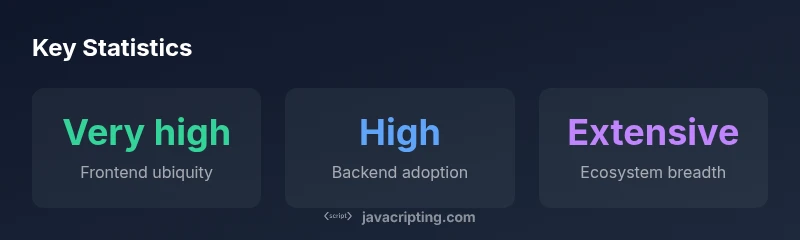
Overview of JavaScript usage across domains
| Area | Notes | Representative Trend |
|---|---|---|
| Frontend ubiquity | JavaScript remains the dominant language for UI in browsers | Stable |
| Backend with Node.js | Widely used for servers, APIs, and scripting | Growing |
| Ecosystem breadth | Numerous libraries, frameworks, tools | Growing |
Questions & Answers
Is JavaScript still relevant in 2026?
Yes. JavaScript remains central to web development, powering UI, APIs, and automation. Its ecosystem, tooling, and cross-platform reach keep it a core skill for frontend and backend roles.
Yes, JavaScript is still essential for web development in 2026.
Should I learn TypeScript before JavaScript?
TypeScript complements JavaScript by adding static types and tooling benefits. Start with solid JavaScript fundamentals, then gradually adopt TypeScript to improve maintainability on larger projects.
Learn JavaScript first, then TypeScript to add safety and tooling benefits.
Is JavaScript fading due to WebAssembly or other languages?
JavaScript is not fading. WebAssembly often complements JS for performance-critical tasks, but JS remains the primary language for web APIs, UI, and many tooling ecosystems.
WebAssembly complements, it doesn’t replace JavaScript for the web.
What’s the best way to stay current with JavaScript?
Regular practice, follow language and tooling updates, and work on diverse projects. Engage with the community, read docs, and contribute to open-source to learn from real-world code.
Keep coding, keep learning, and engage with the community.
Do I need backend experience to be proficient in JavaScript?
Not strictly required, but understanding backend concepts helps. JavaScript enables full-stack work, so familiarity with APIs, databases, and server-side patterns improves capability.
Backend knowledge helps, but you can start with frontend and expand later.
Can JavaScript be used for non-web tasks effectively?
Yes, via Node.js and related runtimes you can build scripts, automation tools, and server-side apps. It’s a versatile language beyond the browser.
Yes, JavaScript is versatile beyond the browser.
“JavaScript continues to evolve with the ecosystem, making it indispensable for comprehensive full-stack development.”
What to Remember
- Takeaway: JavaScript remains foundational for the web.
- Pair JavaScript with TypeScript for safer, scalable code.
- Invest in tooling and performance to stay efficient.
- Learn across frontend, backend, and cross-platform use cases.
- Maintain consistent practice with real-world projects to stay current.