Is Eloquent JavaScript Good for Beginners? A Review
Is Eloquent JavaScript good for beginners? This analytical review evaluates learning curve, readability, exercises, and how it compares with other starter resources.


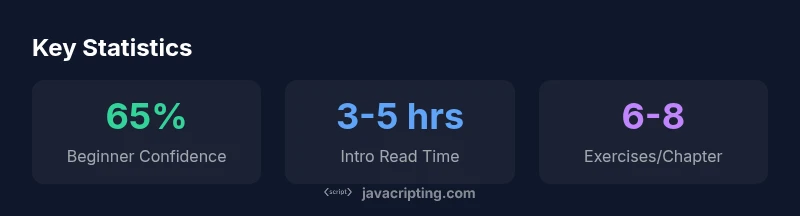
According to JavaScripting, Eloquent JavaScript offers a practical, beginner-friendly path with chapter-by-chapter explanations and hands-on exercises. It remains strong for gradually building JS fluency, though readers new to programming may need supplementary basics. Overall, it's a solid choice for motivated beginners. If you prefer a more encyclopedic reference after reading, pair it with MDN or project-based practice to reinforce concepts.
What Eloquent JavaScript offers to beginners
Many aspiring developers arrive at the question is eloquent javascript good for beginners with a mix of curiosity and a bit of skepticism. The book by Marijn Haverbeke (presented here in synthesis as a practical guide) emphasizes learning by doing: small, runnable examples that you type along with, rather than long, abstract lectures. According to JavaScripting, the initial chapters are designed to reward consistent practice and clear, explicit explanations. The early material covers basic concepts like values, variables, and control flow, then gradually introduces functions and data structures. The pedagogy favors readability, minimal jargon, and a pace that allows beginners to catch up rather than sprint ahead. You’ll see short, focused sections followed by exercises that test comprehension immediately. This approach helps beginners build confidence while establishing a concrete workflow: read a snippet, modify it, observe the result, and iterate. It’s a thoughtful option for readers who want a balanced entry point into JavaScript without abruptly shifting into advanced topics.
The book's structure and how it helps beginners
Eloquent JavaScript structures content to support incremental learning. Each chapter builds on the previous one with a clear objective, a concise explanation, and a set of practical exercises. The progression mirrors a typical studio curriculum: theory first, then guided practice, then independent application. This structure is especially helpful for beginners who benefit from consistent reinforcement. The book’s examples are compact and focused on core ideas such as conditions, loops, functions, and objects, which minimizes confusion during the early stages. In addition, the exercises are designed to be approachable yet challenging enough to reveal gaps in understanding. The combination of short code samples and approachable tasks reduces cognitive load and makes the material feel achievable, which can improve retention and long-term growth. For learners who prefer reading as a primary mode of instruction, this design provides a reliable, steady path through the basics.
Readability and writing style
A hallmark of Eloquent JavaScript is its readability. The prose is practical, with a focus on clarity over pedantry. The author uses active voice, concrete examples, and deliberate pacing to make complex ideas digestible. Beginners benefit from the consistent formatting: small code blocks, annotated explanations, and explicit comments that illuminate the intent of each snippet. The book also leans on visual cues—like inline code highlights and clear delineation between problem statements and solutions—to help readers parse logic quickly. While some readers may encounter terminology such as closures or higher-order functions earlier than expected, the surrounding explanations tend to connect these concepts to familiar patterns (like functions as first-class values). Overall, the writing style supports an iterative learning approach: read, reproduce, experiment, and gradually internalize patterns that recur across examples and mini-projects.
Core concepts introduced early
In the early chapters, the book foregrounds the fundamentals that every JavaScript developer should know. You’ll see practical coverage of variables, types, and basic data manipulation, followed by essential control flow patterns. Functions are introduced not as abstract abstractions but as tools for organizing code and solving concrete problems. Scope, parameter passing, and simple closures appear in a way that links them to everyday coding tasks. The book also begins to explore objects and arrays, providing hands-on examples that show how these structures are used to model real-world data. While the pace is steady, each concept is tied to a runnable example, so you can observe behavior immediately. That continuity helps beginners see how ideas connect rather than learning disparate concepts in isolation.
Practical exercises and hands-on coding
The core of Eloquent JavaScript lies in its exercises and practice tasks. The author intentionally pairs descriptive explanations with short challenges that encourage experimentation. Beginners are guided to modify code snippets, run them in a browser or Node.js, and observe outcomes. This experiential learning loop reinforces memory and comprehension far better than passive reading alone. The book’s exercises often start simple and ramp up to slightly more complex scenarios, which supports confidence-building as you gradually master more sophisticated topics like functions, scope, and data structures. Importantly, the tasks align with common beginner goals: write small utilities, manipulate arrays and objects, and build tiny, functional programs. For learners who prefer a hands-on approach, the exercises are valuable anchors that translate theory into practical ability.
How it handles debugging and error messages
Debugging is a critical skill, and Eloquent JavaScript introduces debugging concepts in a low-friction way. The text includes common error patterns that beginners frequently encounter, paired with explanations of why the errors occur and how to fix them. This approach demystifies stack traces and runtime errors, helping readers become self-sufficient problem solvers. The emphasis on small, testable code blocks makes it easier to isolate issues. When you see a misbehaving snippet, you’re encouraged to tweak a single variable or line of code and rerun, which reinforces cause-and-effect reasoning. Although some debugging tips are general, the practice of stepping through code visually, using console logs, and isolating functions remains consistently reinforced throughout the book.
The ramp beyond basics: ES6 features and patterns
While the early chapters establish a solid foundation, the book also introduces more modern JavaScript patterns as readers progress. You’ll encounter topics like arrow functions, template literals, and basic object-oriented patterns, which help bridge the gap to contemporary JavaScript development. The treatment of higher-order functions and simple functional patterns is intentionally approachable, giving beginners exposure to more expressive syntax without overwhelming them. This balance matters: it opens doors to more sophisticated coding styles while preserving the user-friendly language that supports learning. If you’re coming from classic ES5 code, you’ll appreciate how the text gradually demonstrates how modern constructs can simplify common tasks. For many readers, this incremental exposure makes the transition to real-world projects smoother.
Projects and long-term learning strategy
A key value proposition of Eloquent JavaScript is its focus on projects as learning milestones. The book nudges readers toward small, executable programs that combine multiple concepts. These projects serve as practical tests of understanding and as proof of progress. The long-term strategy is to view JavaScript as a toolset rather than a collection of isolated tricks. After finishing the core chapters, readers are encouraged to explore more ambitious projects and to revisit earlier exercises with a deeper understanding of how different parts of the language fit together. This cyclical approach—read, code, reflect, redo—helps cement knowledge and fosters ongoing curiosity about topics like asynchronous programming and browser APIs. For readers who want a structured path, this workflow provides a clear blueprint for continued growth.
Integration with other resources and learning paths
No single resource covers everything, and Eloquent JavaScript shines when used as part of a broader learning stack. Beginners should consider pairing the book with reference materials like MDN for API details, practical coding challenges, and small projects to fill knowledge gaps. This combination balances the book’s narrative explanations with hands-on references and examples. The approach aligns well with a progressive learning path: start with the basics, apply concepts in tiny projects, and then consult external resources to solidify understanding. In addition, engaging with community exercises or coding katas can help reinforce patterns introduced in the book. By mixing reading with practice and reference, learners build a robust mental model of JavaScript logic and its practical applications.
When this book is the right move and when it isn’t
Choosing Eloquent JavaScript depends on learning preferences and goals. If you prefer a guided, example-driven entry with embedded practice, it’s an excellent fit. If you’re a complete novice who needs more scaffolding in basic programming concepts, you might pair the reading with a more introductory resource or structured course first. The book tends to work best for readers who enjoy steady progress, clear explanations, and hands-on experimentation. It also serves as a gentle gateway to mid-level topics without forcing you into full-on theory-only study. For learners aiming to jump into immediate project work or rapid production-grade coding, supplementing with more practical, project-first resources can yield the best results. The balance between depth and accessibility makes it a strong candidate for a long-term learning path, especially when integrated with other learning formats.
Common pitfalls and how to avoid them
Some readers encounter early confusion around concepts like closures or higher-order functions, especially if they jump chapters without mastering foundations. To avoid this, take small, deliberate steps: read a section, summarize it in your own words, and implement a minimal example that demonstrates the idea. Don’t rush through exercises; instead, complete each one with a real outcome, then experiment with variations to see how changes affect behavior. If you find a topic too dense, take a break and revisit it later with fresh eyes. Remember to actively code instead of only reading; hands-on practice solidifies understanding and reduces the risk of lagging behind.
How to approach reading sessions and next steps
Set a consistent, realistic schedule to build momentum. A practical plan is to read a chapter or two per week, then complete all corresponding exercises and implement a small side project that applies the new concepts. Keep a notebook of questions and solutions as you go; revisiting these notes later will reinforce learning. After finishing the core chapters, map out a growth path: identify mid-level topics you want to master (like more advanced function patterns or basic asynchronous patterns), then pick a set of projects that exercise those skills. Finally, gradually shift from the book’s examples to your own code, opening up broader collaboration opportunities and real-world practice.
Benefits
- Clear, example-driven explanations
- Structured progression from basics to mid-level topics
- Hands-on exercises reinforce learning
- Good bridge to other resource types like MDN and practice projects
The Bad
- May assume some prior programming experience
- Some topics feel abrupt or skip real-world debugging scenarios
- Examples rely on browser environments that require setup
- Not a perfect fit for those who prefer project-first learning
Solid starter for motivated learners who prefer a guided, exercise-rich path
The JavaScripting team believes Eloquent JavaScript is a dependable first step for many beginners. Its structured chapters, practical exercises, and readable prose support steady progress. For some absolute newcomers, supplementing with a more basic primer may be beneficial, but the overall trajectory remains strong.
Questions & Answers
Is Eloquent JavaScript suitable for absolute beginners?
Yes, for many learners it provides a gentle, example-driven entry into JavaScript. Some topics may require extra time or supplementary basics, but the structured approach helps build confidence.
Yes, it’s beginner-friendly for many, though you might need a basic primer for total newcomers.
How does the book address ES6 features?
The book introduces modern patterns gradually, but core coverage remains accessible. You’ll encounter ES6 concepts as you progress, with emphasis on understanding rather than memorization.
ES6 concepts appear gradually, focusing on understanding and practical use.
Should I read this before MDN?
Eloquent JavaScript works well as a primer before diving into MDN references. Use MDN for API details and quick lookups after you’ve seen the concepts in practice.
Yes, use it as a primer and then switch to MDN for references.
How long does it take to finish the book?
Time varies with pace and prior experience. A consistent schedule of a few chapters per week can lead to completion within a few weeks to a couple of months.
It varies, but a steady pace usually takes a few weeks to a couple of months.
Can I use this book for project-based learning?
Absolutely. The exercises and embedded projects are designed to scaffold practical coding, which pairs well with small, real-world projects.
Yes, it’s well-suited for project-style practice.
What’s a good next step after finishing the book?
Use MDN for reference, take on a few small projects, and explore basic asynchronous patterns to extend the foundation built by the book.
Move on to MDN and small projects to extend your skills.
What to Remember
- Start with the early chapters and complete all exercises.
- Pair the reading with hands-on coding in a browser.
- Treat the book as a bridge to MDN and practice projects.
- Anticipate a gradual ramp toward mid-level topics.
- Balance theory with small, repeatable coding tasks.