How to Make Object in JavaScript: A Practical Guide
Learn practical patterns to create objects in JavaScript, from literals to classes. This step-by-step guide covers when to use each approach, real-world examples, and best practices for robust, maintainable code.


According to JavaScripting, this quick guide shows how to make object in javascript using literals, constructors, and classes. You’ll see when to pick object literals for simple data, how to create instances with constructor functions or class syntax, and how to extend objects with methods and prototypes. Practical patterns, performance notes, and common pitfalls help you start building robust objects fast.
Core Concepts: Objects and Why They Matter
In JavaScript, objects are the primary data structure for modeling real-world entities. At their core, objects are collections of key-value pairs, where property names are strings (or symbols) and values can be any data type, including other objects and functions. Understanding objects is foundational to practical JavaScript development. If you’re asking how to make object in javascript, you’ll want to grasp three ideas: how to create them, how to access and mutate properties, and how methods are just properties that hold functions. Another essential concept is prototypical inheritance, which lets one object share behavior with another via the prototype chain. This section provides a solid mental model and sets the stage for the patterns you’ll see next. Throughout, remember that you can experiment in the browser console to observe how objects behave in real time.
Object Creation Patterns: Choosing the Right Tool for the Job
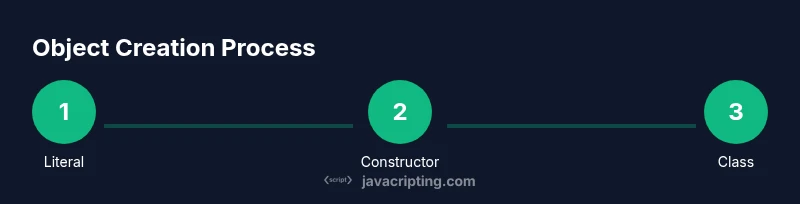
There isn’t a single "best" way to create objects in JavaScript. The pattern you choose depends on your goals: data modeling, reusability, and readability. Object literals are perfect for simple records. Constructor functions and prototypes enable shared behavior with lightweight blueprints. ES6 classes offer a familiar syntax that still uses prototypal inheritance under the hood. Object.create gives you a way to set a specific prototype without invoking a constructor, which is useful for fine-grained inheritance. Factory functions let you compose objects with closures and private state. This section helps you map real-world needs to the right pattern, reducing boilerplate while keeping code maintainable.
Object Literals: The Fast Path
Object literals provide a concise, readable way to model data. They require no setup beyond the curly braces, making them ideal for static data or small collections. You can add methods directly as properties, which keeps behavior tied to the data in one place. For example, you can define a user object with name and email and attach a greet method. Although literals are simple, they don’t scale for dozens of instances or shared behavior—enter constructors, prototypes, or classes for that job. Remember: keep object literals focused on data and use other patterns for behavior and instantiation.
Constructors and Prototypes: Reusable Blueprints
Constructor functions plus prototypes give you a blueprint for many similar objects without repeating code. A constructor initializes properties with this, while prototype methods are shared across instances, reducing memory usage. For example, a Person constructor can set name and age, and a Person.prototype.describe method can be shared by all Person instances. This approach gives you memory-efficient methods and a clear separation between data (instance properties) and behavior (prototype methods). It’s a staple for legacy codebases and when you need explicit constructor control.
ES6 Classes: Syntax and Semantics
Classes in JavaScript are syntactic sugar over the prototype-based inheritance model. They flatten some boilerplate while preserving the same prototypal behavior. A class defines a constructor for initializing instances and can declare methods directly inside the class body. Subclassing uses extends, and super() calls permit calling parent constructors. Classes improve readability and align with many developers’ expectations from other languages, making large codebases easier to navigate. It’s common to use classes for core entities like User, Product, or Widget when you need clean, scalable code organization.
Factory Functions and Object Composition
Factory functions return new objects without new or this. They’re excellent for creating objects with private state through closures and for composing behavior from multiple sources. Object composition favors flexible patterns over rigid inheritance. You can merge properties from several factory results or augment an object with higher-order functions. This approach reduces the pitfalls of deep inheritance trees and encourages modular, testable code. It’s especially powerful in modern JavaScript where you want lightweight, composable building blocks.
Immutability and Safe Object Patterns
Immutability helps avoid bugs by preventing unexpected object mutations. Techniques include using Object.freeze to lock down object properties, Object.seal to prevent new properties from being added, or returning new objects from functions instead of mutating inputs. When safety is paramount, consider using pure functions and immutable data structures or libraries that enforce immutability. These patterns make your code more predictable and easier to reason about, particularly in complex apps with many moving parts.
Practical Example: Build a Simple User Object
Let’s walk through a concrete scenario: building a user object that can greet, update its own name, and track whether the user is active. Start with a literal for a quick prototype, then convert to a class for more structure, and finally use a factory function to enable composition. This approach demonstrates how to apply multiple patterns to real tasks, keeping code approachable and extensible. The example includes both code and explanations so you can adapt it to your project.
Debugging, Performance, and Best Practices
When you design objects, keep performance and memory usage in mind. Prefer shared methods via prototypes or class prototypes over duplicating functions on every instance. Use destructuring to access properties concisely, and reserve Object.freeze for data you never want mutated. Always test both typical and edge cases, such as missing fields or unexpected types. Clear naming, single-responsibility patterns, and small, focused objects help maintainability and reduce bugs as your codebase grows.
Tools & Materials
- Code Editor (e.g., VS Code)(Install JavaScript extensions for linting and IntelliSense)
- Node.js (v14+ or newer)(Run quick Node-based examples and tests)
- Modern web browser with DevTools(Use console, breakpoints, and profiling tools)
- Sample code snippets(Copy-paste patterns for experimentation)
Steps
Estimated time: 30-60 minutes
- 1
Define your object’s goal
Clarify what data the object should model and what behavior it should expose. This helps determine whether a literal is enough or you need a pattern with methods and instances.
Tip: Write a brief spec in plain language before coding. - 2
Choose the creation pattern
Decide between literal, constructor, class, or factory based on the scale and reuse needs of your project.
Tip: If you’ll create many similar objects, lean toward a blueprint pattern (class or constructor). - 3
Create a simple object literal
Start with a small data container to validate shape. Add a method to demonstrate behavior, keeping data and behavior together in a single object.
Tip: Keep literals focused on data; move behavior into prototypes or classes as complexity grows. - 4
Add methods with concise syntax
Use shorthand method definitions to keep code clean inside objects, classes, or prototypes.
Tip: Prefer function properties to standalone functions if they rely on instance data. - 5
Define a constructor for reusable blueprints
Create a function that initializes properties with this and use prototype to share methods.
Tip: Always prototype-method rather than duplicating the same function on every instance. - 6
Transition to ES6 classes when appropriate
Convert a constructor pattern to a class with a constructor() and instance methods. Extend for inheritance.
Tip: Classes offer clearer intent; they’re not magic—underneath they’re old-fashioned prototypes. - 7
Explore factory functions and object composition
Create functions that return objects, optionally combining multiple behaviors via composition.
Tip: Use closures for private data and avoid leaking implementation details. - 8
Enforce immutability where needed
Lock down data with Object.freeze or return new objects to avoid mutations.
Tip: Immutability reduces side effects and makes reasoning about code easier. - 9
Test, debug, and profile
Use console logs, breakpoints, and performance tools to verify object shape, inheritance, and memory usage.
Tip: Write targeted tests for edge cases like missing properties and unusual types. - 10
Reflect and refine
Review your object design after integration into larger features; adjust patterns to balance clarity and flexibility.
Tip: Aim for simple, predictable APIs that other developers can reuse without deep study.
Questions & Answers
What is the difference between an object literal and a class instance?
An object literal is a single, standalone object defined with braces. A class instance is created from a class blueprint and shares behavior with other instances via the prototype. Use literals for simple data and classes when you need multiple instances with shared methods.
A literal is a one-off object. A class instance comes from a blueprint that lets you make many similar objects with shared behavior.
When should you prefer Object.create versus a class?
Object.create lets you set a specific prototype chain without invoking a constructor, which is handy for fine-grained inheritance. Use classes when you want a clear, familiar syntax and built-in constructor semantics for many instances.
Object.create is prototype-focused and lightweight; classes provide a familiar structure with constructor logic for multiple instances.
How do you make an object immutable?
Use Object.freeze to prevent changes to an object’s properties. For deeper immutability, freeze nested objects and prefer returning new objects rather than mutating inputs.
Freeze the object to prevent changes, and consider freezing nested objects or returning a new object instead of mutating the original.
Is there a performance difference between literals and classes?
Performance differences are usually negligible for typical apps. The choice should be guided by readability, maintainability, and future needs rather than micro-optimizations.
Performance is rarely the deciding factor; focus on maintainability and clarity first.
Can I mix patterns in a single project?
Yes, you can mix object literals, classes, and factory patterns. Balance is key: use each pattern where it fits best and document decisions to avoid confusion.
Absolutely—different parts of your app can use different patterns as long as you keep the code understandable.
What is prototypal inheritance in JavaScript?
Prototypal inheritance uses objects as prototypes to share behavior. Objects delegate property lookups to their prototype, enabling shared methods without duplicating code.
Objects can reuse behavior through their prototype chain, enabling shared methods without repetition.
Watch Video
What to Remember
- Understand the main object creation patterns
- Choose based on maintainability and reuse needs
- Use literals for simple data and classes/factories for scalable patterns
- Prefer prototype/shared methods to conserve memory
- Immutability improves reliability