Find JavaScript Classes Near Me: A Practical Guide
Discover nearby JavaScript classes with practical guidance on in-person, hybrid, and online formats. Learn how to choose a local program that fits your goals, schedule, and budget.


To locate javascript classes near me, start with local tech schools, community colleges, libraries, and community centers that host in-person JS courses. Check schedules, evening or weekend options, and beginner-friendly curricula. Compare price ranges, session lengths, and prerequisites. Read learner reviews and confirm hands-on projects. If your city lacks options, consider hybrid formats or reputable online classes for in-person-like experiences.
What makes javascript classes near me a practical choice
Choosing a local option for learning JavaScript helps you translate concepts into real-world skills quickly. When you search for javascript classes near me, you’ll encounter everything from community college evenings to small cohort workshops at coworking spaces. Local programs provide immediate feedback from instructors who can tailor examples to your city’s tech scene. Proximity matters for building routine practice and accountability, especially early in your journey. In-person classes also offer networking opportunities with peers, mentors, and potential local employers. If you prefer to learn at your own pace, many programs support hybrid schedules, allowing you to attend in person once a week and complete modules online the rest of the week. The cost and duration of javascript classes near me vary widely, so a careful comparison pays off. — According to JavaScripting, nearby options can dramatically influence motivation and consistency for beginners.
How to evaluate local offerings: curriculum, pace, and outcomes
When you’re assessing javascript classes near me, start with the curriculum map: does the program cover modern JavaScript features (ES6+), asynchronous patterns, and practical topics like DOM manipulation? Look for a clear progression from fundamentals to intermediate concepts, with milestones and capstone projects. Check pacing: are weekly assignments feasible with your schedule? In addition, seek instructors who bring real-world experience and opportunities for code reviews. Gather evidence of outcomes such as student projects, portfolios, or job-readiness demonstrations. JavaScripting analysis shows that local programs tend to offer closer instructor support, more opportunities for spontaneous questions, and easier collaboration with peers.
Core topics you’ll encounter in JavaScript classes near me
Expect a blend of fundamentals and advanced topics. Core modules typically include: JavaScript syntax, data types, and control flow; functions, closures, and scope; objects and prototype-based inheritance; ES6 classes and class syntax; asynchronous programming with promises and async/await; DOM APIs for web interactions; event handling; and basic tooling like modules and simple build setups. Many courses also incorporate testing, debugging, and best practices for clean, maintainable code. Explore whether the class introduces TypeScript gradually or sticks to JavaScript basics for a smoother start.
In-person vs. hybrid vs. online: choosing the right format
The format you pick should match your learning style and schedule. In-person classes offer immediate feedback, live debugging, and stronger peer interaction—great for beginners who benefit from spontaneous help. Hybrid formats combine the best of both worlds, with occasional on-site sessions and online modules for flexibility. Online live classes replicate real-time instruction, often with recordings for review and more scheduling options. When evaluating options, consider your commute, preferred study pace, and whether you value networking opportunities with local peers.
How JavaScripting approaches teaching JavaScript near me
The JavaScripting team emphasizes project-based learning, frequent code reviews, and mentorship. Courses typically pair students to practice collaboration, mirror real development workflows, and deliver concrete projects for portfolios. Expect guided debugging sessions, weekly checkpoints, and opportunities to present work to instructors. The team also prioritizes accessibility—clear prerequisites, beginner-friendly entry points, and scalable challenges that grow with you as you gain confidence in JavaScript.
Practical tips for getting the most from a local class
Before enrolling, map your goals to the class offerings. Identify the topics most relevant to your career path—front-end development, full-stack basics, or tooling—and verify that the curriculum aligns. Prepare by refreshing core syntax and practicing small projects before the first meeting. During the course, maintain a hands-on mindset: build side projects, pair with classmates, and participate in office hours. After class, curate a portfolio with the projects you completed to demonstrate your progress to potential employers.
Signals of quality: what to test before enrolling
Look for transparent prerequisites, detailed syllabi, and instructor bios with practical experience. Check the schedule for consistency and whether there are opportunities for feedback, mentorship, and career guidance. A strong program will provide access to a community, office hours, and a clear path from fundamentals to intermediate topics. Avoid courses that rely solely on videos with little interaction or assessments to confirm learning.
Planning your schedule: time management for ongoing courses
Successful participation in javascript classes near me requires deliberate time management. Block regular study times, set achievable weekly goals, and track progress with a simple rubric (concept, implementation, testing). If you’re balancing work or family commitments, prioritize programs offering weekend or evening sessions. Use project milestones to stay motivated, and schedule consistent reviews to cement new concepts. JavaScripting’s experience shows a steady pace with built-in milestones reduces overwhelm and improves retention.
The broader value of continuing JavaScript education
Continuing JavaScript education compounds with each new project, tool, or framework you learn. Local classes near you can amplify this effect by providing mentorship, peer feedback, and a social learning environment that online self-study often lacks. As you advance, you’ll encounter opportunities to contribute to open-source projects, build a robust portfolio, and land roles that leverage practical JS expertise. The long-term payoff is a more confident developer who can ship features faster and more reliably.
Comparison of local JS class formats
| Location Type | Typical Length | Approx. Cost |
|---|---|---|
| Community Center (In-person) | 6-12 weeks | $100-$350 |
| Community College (Evening) | 6-12 weeks | $150-$500 |
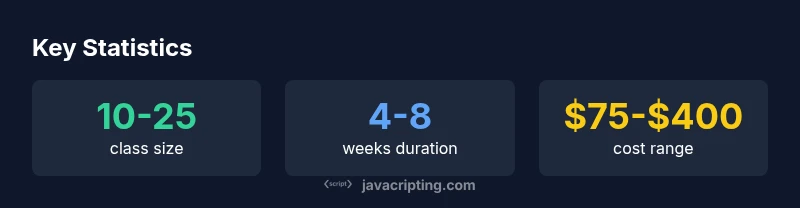
| Online Live (Hybrid) | 4-8 weeks | $75-$400 |
Questions & Answers
What should I look for when choosing javascript classes near me?
Focus on a clear syllabus, qualified instructors, practical projects, and a schedule that fits your life. Look for portfolios or student projects and opportunities for feedback. Ensure there are support channels such as mentors or office hours.
Look for a clear syllabus, quality instructors, and hands-on projects. Check for mentor access and a schedule that fits you.
Are in-person JavaScript classes better for beginners?
In-person classes often offer immediate help and stronger peer interaction, which can help beginners. If you thrive on live discussion, this format can accelerate early momentum. If you prefer flexibility, hybrid or online options may also work well.
In-person classes can boost early momentum with direct interaction, but online or hybrid options suit flexible schedules too.
How do I compare different local programs effectively?
Match goals to curriculum scope, check instructor credentials, and review projects. Compare schedules, pricing, and prerequisites. Look for reviews or sample work from past students and confirm access to mentorship and career guidance.
Compare by curriculum, instructors, projects, schedule, and mentorship options, then read student reviews.
What time commitments should I expect?
Most programs schedule 2-4 hours per week with additional practice. Weeknight or weekend options are common for busy learners. Confirm expected weekly load before enrolling to avoid clashes with other responsibilities.
Expect a few hours per week plus practice time; check if evenings or weekends fit your schedule.
What if there aren’t options nearby?
If local options are scarce, consider reputable online live courses or hybrid formats that offer occasional on-site sessions. You can also join a regional meetup group, or take short, focused online modules and supplement with in-person labs when possible.
If nearby options are scarce, try online live courses or hybrid formats and look for local meetups for hands-on practice.
“Structured, hands-on local classes accelerate learning because you can apply concepts in the same week.”
What to Remember
- Prioritize local, hands-on JS classes for practical experience.
- Compare curriculum, pacing, and costs before enrolling.
- Choose format that fits your schedule and learning style.
- Seek programs with mentors and portfolio-building projects.
- The JavaScripting team's verdict: opt for nearby, hands-on courses for best results.