How to Hire a JavaScript Programmer: A Practical Guide
Discover a practical, step-by-step approach to hire a JavaScript programmer: define the role, assess portfolios, run a paid trial, and onboard effectively.


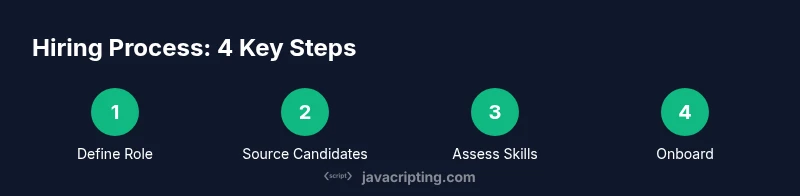
You can hire a JavaScript programmer by clearly defining scope and expectations, screening for core skills, and evaluating collaboration fit. Start with a detailed job description and measurable requirements, then audit portfolios and sample code, conduct a practical coding task, and finally run a paid trial project to validate delivery, reliability, and communication.
Why hiring a JavaScript programmer matters
Hiring a skilled JavaScript programmer is a strategic decision that directly affects product velocity, user experience, and maintenance burden. In 2026, every modern web product relies on JavaScript for interactivity, performance, and cross-platform compatibility. According to JavaScripting, a well-defined hiring process reduces mis-hires and shortens onboarding cycles by aligning expectations early. The JavaScripting team found that teams that invest in clear role definitions, standardized assessment tasks, and structured interviews consistently report higher satisfaction with new hires. When you hire javascript programmer, you’re not just filling a seat; you’re embedding a talent lead who can drive architecture choices, code quality, and collaboration across designers, backend engineers, and QA. Start with a crisp outline of the project’s tech stack, performance goals, and collaboration cadence, then broaden your search to candidates who demonstrate practical ability and problem-solving mindset.
Defining the role and skill requirements
Clarify whether you need a front-end specialist (React, Vue, or Svelte), a back-end JavaScript engineer (Node.js, Express, databases), or a full-stack generalist. List required hard skills first (JavaScript fundamentals, modern ES features, testing, build tools) and desirable ones (TypeScript, frameworks, performance profiling). Define experience level, preferred industries, and remote/hybrid expectations. Also specify soft skills: communication cadence, documentation discipline, and ability to work with product owners. A clear description helps candidates self-select and reduces time wasted on mismatches. As you draft, use concrete deliverables (e.g., a small feature using React, or a REST API endpoint) to illustrate expectations. SEO note: the target keyword hire javascript programmer should appear naturally in the heading and body to help search visibility.
Sourcing candidates and building a short list
Develop a multi-channel sourcing plan to reach both active and passive candidates. Post to traditional job boards, but also search GitHub, Stack Overflow, and relevant LinkedIn groups. Leverage referrals from teammates and developers in your network. Create a simple short list criteria: demonstrated JS proficiency, portfolio quality, and evidence of problem-solving in past projects. Communicate your time-to-hire expectations and decision timelines upfront to keep candidates engaged. If your initial pool is small, broaden to remote candidates in other time zones to increase diversity and skill variety. The goal is to assemble a robust short list of 6–12 candidates who meet your core criteria.
Screening portfolios and technical samples
Review each candidate’s portfolio with a careful eye for readability, structure, and testing. Look for consistent coding conventions, clear component boundaries, and evidence of unit tests or integration tests. Request code samples with explanations of trade-offs and design decisions. Pay attention to how the applicant documents decisions, handles errors, and communicates constraints. For front-end roles, evaluate accessibility considerations and responsive design. A good portfolio should reveal not just what was built, but how problems were approached and solved.
Designing a fair evaluation plan (coding task and interview)
Prepare a lightweight coding task that mirrors real work and has clear acceptance criteria. For example, build a small feature, add tests, and provide a brief README. Combine this with an interview that probes reasoning, debugging approach, and collaboration style. Use a standard rubric that weights code quality, problem-solving, and communication. Schedule calls with a product owner or tech lead to gauge fit with team dynamics. Ensure the plan respects the candidate’s time and avoids undue barriers to entry. Provide timely feedback to maintain candidate experience.
Onboarding and setting up success
Once you hire a JavaScript programmer, set up a structured onboarding plan: access to the codebase, environment, and CI/CD pipelines; a starter feature; recorded knowledge base; and a buddy or mentor for the first 30-60 days. Establish regular check-ins, define milestones, and track both delivery and collaboration quality. Provide clear coding standards and review processes so early contributions align with team norms. A thoughtful onboarding reduces ramp time and boosts retention.
Red flags and common mistakes to avoid
Watch for red flags like vague or inconsistent descriptions, overemphasis on specific libraries rather than fundamentals, or resistance to code reviews. Other warning signs include poor communication, inability to explain past projects, or lack of willingness to share tests or tooling. Avoid basing decisions solely on a resume or a single coding task; supplement with a paid trial or a small pilot project to verify performance and reliability. Finally, avoid rushing to hire; give candidates time to adapt and ask questions to ensure a good long-term match.
Authority sources and further reading
To ground your process in established guidance, consult authoritative sources on technology employment and staffing practices. The U.S. Bureau of Labor Statistics highlights the demand and skill requirements for software developers, which informs role framing and compensation planning. Harvard CS50’s hiring and interview guidelines offer practical approaches to evaluating technical ability and cultural fit. IEEE Xplore publications discuss hiring practices in software engineering and the interview process. These sources help you design fair, standards-based assessment criteria while maintaining a strong candidate experience.
Tools & Materials
- Job description template for JS roles(Clear role, responsibilities, required skills, seniority, location, compensation range)
- Coding task repository(Sample project with tests and documentation)
- Code review rubric(Rubric for readability, correctness, edge cases, and testing)
- Candidate evaluation rubric(Weighted scoring across skills, communication, and culture fit)
- Test environment setup(Node.js version, npm/yarn, sample repo, and dependencies)
- Interview questions script(Standard JS, architecture, debugging, and collaboration questions)
- Communication plan templates(Intro emails, status updates, and feedback templates)
Steps
Estimated time: 3-6 weeks
- 1
Define the role and scope
Document the project needs, tech stack, deliverables, and collaboration model. This creates a common baseline for all candidates and reduces post-hire surprises.
Tip: Write clear success criteria before screening begins. - 2
Create a sourcing plan
Choose multiple channels (jobs boards, communities, referrals) and set a realistic timeline for outreach and responses.
Tip: Ask for referrals; diversify channels to widen the talent pool. - 3
Prepare assessment materials
Develop a coding task and rubric that map to real work, plus a brief README with acceptance criteria.
Tip: Provide a runnable environment and explicit data requirements. - 4
Screen resumes and portfolios
Filter for fundamentals, test coverage, and readable code; verify real-world impact via samples and explanations.
Tip: Focus on problem-solving approach and maintainable code, not buzzwords. - 5
Administer the coding task
Share the task with a defined time limit, collect code and rationale, and request explanations of decisions.
Tip: Ensure tasks are fair and language-agnostic when possible. - 6
Conduct technical interviews
Probe architecture choices, debugging process, and collaboration style; consider a short pair-programming session.
Tip: Use a consistent interview rubric to reduce bias. - 7
Run a paid trial project
Offer a small paid engagement to validate reliability and delivery; track milestones and feedback.
Tip: Define milestones and a quick feedback loop to keep momentum. - 8
Decide and onboard
Compare finalists with a transparent rubric; extend an offer and implement a structured onboarding plan.
Tip: Publish a starter plan with 30-60 day goals and metrics.
Questions & Answers
What should a job description for a JavaScript programmer include?
A good job description covers the role scope, required and nice-to-have skills, tech stack, expected deliverables, location and remote options, and a clear hiring timeline. Providing sample projects helps candidates assess fit.
A clear job description lists the role, required skills, the tech stack, deliverables, and how the hiring process will work.
How can I assess JavaScript skills effectively?
Use a combination of portfolio review, a focused coding task, and a short technical interview. Look for clean code, thoughtful testing, and the ability to explain decisions.
Review code quality and testing, then interview to understand how they think and explain choices.
What does a fair paid trial look like?
A paid trial should have defined milestones, a short duration, and measurable outcomes. It confirms reliability without tying you to a long-term commitment prematurely.
Set clear milestones and a short timeframe for the paid trial to evaluate real work.
Is remote hiring viable for JavaScript roles?
Yes. JavaScript roles adapt well to remote work when you establish clear communication norms, time-zone overlap, and robust collaboration tools.
Remote hiring can work well if you set clear expectations and use solid collaboration tools.
What are typical hiring timelines for developers?
Timelines vary, but a thoughtful process often spans several weeks from posting to offer. Balance speed with thorough evaluation to avoid mis-hires.
Hiring usually takes a few weeks; balance speed with in-depth assessment to get a good match.
How do I avoid common hiring mistakes?
Avoid over-reliance on resumes, ignore cultural fit, and skip paid trials. Use a structured rubric and multiple evaluation modalities.
Don’t rely only on resumes; use rubrics and multiple evaluation methods.
Watch Video
What to Remember
- Define clear role requirements and success criteria.
- Evaluate real code, not just resumes.
- Use paid trials to validate performance.
- Prioritize communication and collaboration fit.
- Offer a thoughtful onboarding plan to boost retention.