Hire a JavaScript Developer: A Comprehensive How-To Guide
Learn how to hire a JavaScript developer: define scope, vet skills, test code, interview effectively, and negotiate contracts. This practical guide from JavaScripting covers remote-friendly practices, onboarding, and best-practice hiring workflows.


Learn how to hire a JavaScript developer efficiently. This guide covers defining project needs, sourcing qualified candidates, evaluating code samples, conducting structured interviews, and negotiating contracts. You’ll also find onboarding tips for teams and remote-friendly practices. By the end, you’ll have a practical, repeatable process that reduces risk and accelerates delivery.
Why hiring a JavaScript developer matters for your project
According to JavaScripting, selecting the right JavaScript developer is foundational to delivering robust, scalable web applications. A skilled JS pro drives maintainability, performance, and user experience, reducing bug cycles and rework. The right hire also aligns with your tech stack, collaboration style, and product roadmap. In practice, investing time in a thoughtful hiring process pays dividends in fewer misfits, faster ramp-up, and clearer ownership across front-end, back-end, or full-stack roles. Consider how a dedicated JS developer will influence architecture decisions, testing strategies, and future refactors. When you start with a clear problem statement and success metrics, you’ll attract candidates who can translate requirements into reliable code and collaborative outcomes.
documentStyleHints: 1
Tools & Materials
- Job description template(Outlines responsibilities, tech stack, seniority level, and performance indicators)
- Laptop/desktop with stable internet(Modern browser, code editor installed, overhead for video interviews)
- Portfolio review checklist(Capable of evaluating past projects, code quality, and deliverables)
- Coding task environment(Remote sandbox or IDE setup for live coding or take-home tasks)
- Interview scoring rubric(Standardized criteria to rate technical and soft skills)
- Non-disclosure agreement (NDA)(Optional for sensitive project details)
- Salary/bandwidth range(Provide a transparent budget range to anchor negotiation)
- Reference check template(Structured questions for past performance and collaboration style)
Steps
Estimated time: 4-6 weeks
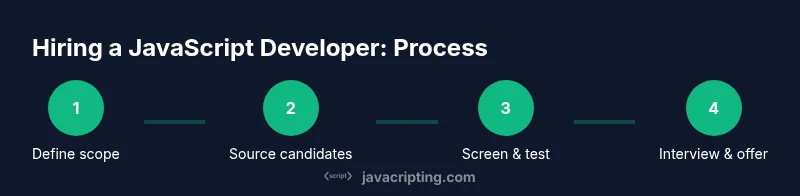
- 1
Define scope
Clarify project goals, target outcomes, and success metrics. Identify required tech stack (React, Vue, Node.js, TypeScript, testing frameworks), seniority, and collaboration style. Document constraints, timelines, and non-negotiables to guide evaluation.
Tip: Write a one-page requirements brief and secure stakeholder alignment before outreach. - 2
Source candidates
Publish the role on targeted platforms, leverage professional networks, and solicit referrals. Prioritize candidates with demonstrable JS portfolios and examples close to your domain. Clearly communicate your tech stack and project scope to attract fitting applicants.
Tip: Use short, precise job postings to reduce unsuitable applications. - 3
Screen resumes
Filter for core JavaScript proficiency, relevant frameworks, and practical experience. Look for consistency in roles, project impact, and indicators of problem-solving ability. Shortlist candidates who show measurable contributions rather than generic claims.
Tip: Create a checklist: fundamentals, frameworks, testing, and deployment experience. - 4
Assign a practical task
Provide a task closely aligned with your real work. Include clear requirements, constraints, and evaluation criteria. Allow a reasonable time to complete, then assess code quality, style, architecture, and documentation.
Tip: Offer a paid, time-bound task to respect candidate time and show seriousness. - 5
Conduct structured interviews
Use a consistent question set to compare candidates fairly. Cover technical depth, problem-solving approach, and collaboration. Include a live coding segment if feasible, and discuss architecture decisions the candidate would make.
Tip: Record responses against a rubric to minimize bias. - 6
Check references
Reach out to former teammates or managers to confirm reliability, communication, and delivery quality. Ask about code ownership, responsiveness, and ability to work in a team. Verify any highlighted achievements from the resume.
Tip: Prepare 3-5 targeted questions per reference. - 7
Make an offer
Present compensation, equity (if applicable), expectations, and the project scope. Be transparent about contract type, IP rights, remote work policies, and onboarding timelines. Prepare to discuss trade-offs and alternatives if needed.
Tip: Anchor your offer to clearly defined milestones and outcomes. - 8
Finalize contract
Draft or review a contract that covers confidentiality, IP, deliverables, and termination terms. Ensure alignment on billing cadence, milestones, and acceptance criteria. Have legal review if required.
Tip: Keep critical terms in writing and share a single source of truth. - 9
Onboard and ramp up
Introduce the developer to project goals, tooling, and codebase. Provide a lightweight ramp plan with milestones and regular feedback loops. Establish communication channels and code review processes early.
Tip: Assign a mentor or buddy for the first 2-4 weeks. - 10
Review and iterate
Monitor progress against milestones, collect feedback, and adjust priorities as needed. Continuously refine interview and screening criteria based on outcomes and team needs.
Tip: Keep a running log of lessons learned to improve future hires.
Questions & Answers
What are the best sources to find JavaScript developers?
The best sources combine niche developer communities, referrals, and reputable job platforms. Tailor postings to your tech stack and project needs to attract candidates with relevant experience.
Look for communities and referrals that align with your stack; tailor postings to attract the right candidates.
How important are code samples in candidate evaluation?
Code samples provide tangible insight into style, problem solving, and readability. They should reflect the actual tasks the role entails and be paired with a live discussion.
Code samples help you see how candidates think and code in real situations.
What interview questions work well for frontend JavaScript roles?
Ask about event handling, DOM manipulation, asynchronous patterns, state management, and performance optimization. Include a live debugging scenario to gauge practical skills.
Focus on real-world scenarios like debugging a race condition or optimizing a render cycle.
Contractor vs. full-time: which is better for JS projects?
Contractors suit quick starts and specific sprints; full-time hires offer deeper team integration and long-term alignment. Consider blended models for complex, evolving product work.
Think about project duration, team fit, and long-term goals when choosing a model.
How can I assess a candidate's fit with our tech stack?
Compare their historical projects with your stack, examine architecture decisions, and request targeted tasks. Look for adaptability and willingness to learn new tools.
Ask for examples showing work with your stack and related tools.
What red flags indicate a poor hire?
Inconsistent timing, vague explanations, poor communication, inability to explain past decisions, and resistance to feedback are warning signs. Clarify expectations early to avoid misalignment.
Watch for lack of clarity, poor communication, or unwillingness to adapt.
Watch Video
What to Remember
- Define clear needs before outreach.
- Use structured screenings and tests.
- Evaluate real code samples, not just resumes.
- Be transparent on terms and onboarding.
- Onboard with a concrete ramp-up plan.