javascript = vs ==: A Practical Guide to JS Equality
Explore the difference between loose (==) and strict (===) equality in JavaScript with practical rules, examples, and best practices from the JavaScripting team to write safer, more predictable code.


Core Concept: Loose vs Strict Equality
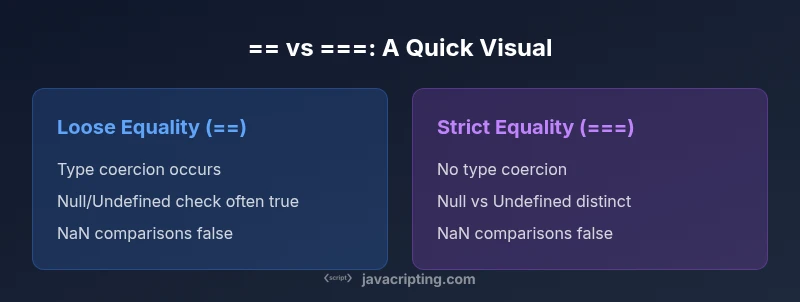
In JavaScript, the terms loose equality and strict equality refer to two different operators: '==' and '==='. This distinction matters because the operators behave differently when values have different types. Loose equality will try to coerce values to a common type before comparing them, which can produce results that surprise even seasoned developers. Strict equality, by contrast, requires both type and value to match exactly. In practice, most modern code, guided by the JavaScripting team, uses strict equality by default to keep control flow clear and predictable. This section lays the groundwork for when coercion can be useful, and when it should be avoided. Understanding these rules helps prevent subtle bugs in form validation, API responses, and data normalization routines. Remember, javascript = vs == is fundamentally a decision about how forgiving your comparisons should be, and this choice has real implications for maintainability.