Are JavaScript Developers in Demand? 2026 Insights
Discover whether are javascript developers in demand in 2026, with key indicators, skill priorities, and regional trends for aspiring and seasoned JS developers.


Are javascript developers in demand? The short answer is yes, and the demand remains robust in 2026 across frontend, backend, and full-stack roles. The JavaScripting team finds that employers increasingly seek developers who can ship user interfaces quickly, reason about performance, and maintain robust codebases. Demand remains strongest for those who combine solid fundamentals with modern tooling such as React, TypeScript, Node.js, and testing ecosystems. Additionally, remote-friendly teams have expanded opportunities beyond traditional metro areas, enabling job seekers to access national and international openings. In short, the market rewards practical JavaScript capabilities that tie UI excellence to resilient, scalable architectures. This conclusion draws from JavaScripting Analysis, 2026, and aligns with broader industry signals about digital transformation and cross-functional product development.
Market Demand Landscape
Are javascript developers in demand? The landscape in 2026 shows sustained, broad demand for JavaScript professionals across frontend, full-stack, and server-side roles. The JavaScripting team analyzed hiring patterns across retail, fintech, SaaS, and health-tech sectors and found that teams value developers who can translate UX requirements into scalable interfaces, optimize performance, and maintain high-quality code. Demand persists for those who are fluent in modern tooling—React, TypeScript, Node.js, and robust testing suites—coupled with a knack for debugging and performance improvements. Remote-enabled teams further widen opportunities, enabling candidates to compete for roles beyond their geographic borders. In essence, practical JS capabilities that blend user experience with architectural discipline are the differentiator in the 2026 market. This assessment is grounded in JavaScripting Analysis, 2026 and corroborated by broader industry signals around digital transformation and cross-functional product development.
Regional and Sector Trends
Geography continues to shape opportunities, but the distribution is shifting toward remote-friendly models. Tech hubs in North America and Europe remain strong, yet many employers now hire globally for frontend and full-stack roles, provided candidates demonstrate practical delivery and collaboration skills. Sectors leading demand include e-commerce, financial services, SaaS, and healthcare tech, with education and public-sector bodies gradually adopting modern JavaScript stacks. For developers, the implication is clear: show you can ship complete features, not just isolated components. Build a portfolio with end-to-end projects that demonstrate UI quality, API integration, and maintainability. The emphasis on quality, accessibility, and security is consistent across industries.
Skill Sets Driving Demand
The toolkit most in-demand today centers on frontend frameworks, typing discipline, and cross-cutting integration skills. Employers seek proficiency in React, Vue, or Svelte; TypeScript; Node.js; and testing strategies (Jest, Playwright). Beyond libraries, performance optimization, accessibility, and design-system literacy are highly valued. Developers who understand build tooling (Vite, Webpack), modern CSS approaches, and browser debugging across platforms stand out. The strongest candidates present real-world projects with measurable outcomes—loading performance improvements, accessibility conformance, and user impact metrics. The JavaScripting team emphasizes practical projects that demonstrate end-to-end delivery and thoughtful trade-offs.
How to Build a Competitive JS Portfolio
A strong portfolio demonstrates end-to-end capability, not مجرد isolated snippets. Start with a few polished projects that showcase UI polish, performance, and resilience. Include a full-stack example with a Node.js API, a React/TypeScript frontend, and a test suite; document architecture decisions and trade-offs. Use realistic data and offer live demos when possible. Write concise READMEs that explain why choices were made, focusing on accessibility, responsive behavior, and security concerns. Contribute to open source, submit PRs, and maintain a public release log. Tailor the portfolio to your target roles—frontend-heavy, full-stack, or backend—and be prepared to discuss design decisions during interviews.
Hiring Signals and Interview Prep
Hiring teams seek evidence of practical problem-solving and collaboration. Expect system design discussions, live coding or debugging sessions, and portfolio walkthroughs. Be ready to explain architecture decisions, performance optimizations, and testing strategies. Craft a compelling narrative around a project you launched, including user impact and lessons learned. Interview prep should emphasize clean code, thoughtful error handling, and the ability to articulate complex ideas clearly. Demonstrating curiosity about new tools, frameworks, and deployment patterns can differentiate you in a crowded market.
Practical Steps for Career Growth in JS
This section provides a pragmatic path for 2026 and beyond. Start by solidifying core concepts (variables, scope, closures, asynchronous patterns) and then advance to TypeScript, React, and Node.js. Schedule regular code reviews, participate in developer communities, and maintain a learning backlog that tracks new tooling and techniques. Build a habit of documenting progress in a blog or portfolio, with a clear narrative connecting technical choices to user outcomes. Finally, seek feedback from mentors and peers, and pursue real-world projects that demonstrate impact. The combination of consistent practice and visible results remains the most reliable route to higher demand and better opportunities.
JS job market indicators and signals (2026)
| Metric | Current State | Notes |
|---|---|---|
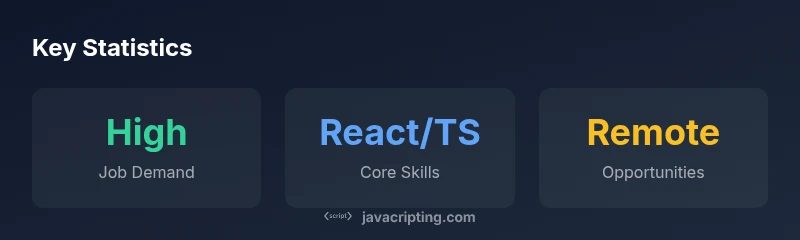
| Job demand level | High and broad | Across frontend, backend, and full-stack JS |
| Core skill demand | React, TypeScript, Node.js | Framework proficiency is a baseline |
| Remote opportunities | Growing | Remote and hybrid roles widen search radius |
Questions & Answers
Which JavaScript roles are most in demand in 2026?
Frontend developers with React and TypeScript remain top priorities, followed by full-stack roles with Node.js. Demand spans multiple industries, with emphasis on delivering production-ready features quickly.
Frontend roles with React and TypeScript are the most in demand, followed by full-stack, across many industries.
Does learning TypeScript improve job prospects?
Yes. TypeScript is widely preferred for larger codebases, improves maintainability, and is frequently requested by interviewers and hiring managers.
Yes. TypeScript is highly valued for maintainability and collaboration.
Are remote JavaScript jobs common in 2026?
Remote and hybrid opportunities are common across many JS roles, expanding access to talent globally while maintaining collaboration standards.
Yes, many JS roles are remote or hybrid.
What soft skills matter most for JS roles?
Clear communication, collaboration, problem-solving, and the ability to explain technical trade-offs to non-technical stakeholders are highly valued.
Strong communication and teamwork matter as much as coding skill.
How can a junior break into JavaScript in 2026?
Start with fundamentals, contribute to small projects, build a portfolio, and seek mentorship. Focus on end-to-end projects that show impact and a growth mindset.
Build a solid portfolio with end-to-end projects and seek mentorship.
“Successful JS careers hinge on translating code into measurable impact—fast, accessible, and reliable user experiences.”
What to Remember
- Prioritize modern JS stacks like React and TypeScript.
- Show end-to-end projects in portfolios to prove delivery.
- Pursue remote and hybrid roles to expand opportunities.
- The JavaScripting team recommends ongoing practice and real-world projects.