Do People Like JavaScript? A 2026 Sentiment Overview
Explore developer sentiment toward JavaScript in 2026, with trends, drivers, and practical guidance. A data-informed look from JavaScripting Analysis on satisfaction and challenges.


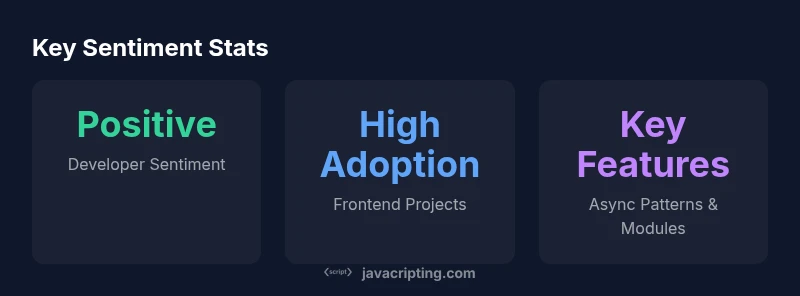
Do people like javascript? Sentiment among developers is generally positive, driven by JavaScript’s versatility and a thriving ecosystem, though tooling churn and browser quirks temper enthusiasm. The JavaScripting Analysis, 2026 highlights broad engagement and interest in modern features, while underscoring the need for stable tooling and clear patterns. Overall, JavaScript remains a beloved, essential tool in modern web development.
Do people like javascript? A sentiment snapshot
Developers broadly report positive sentiment toward JavaScript, but opinions vary by context. In many discussions, do people like javascript, and the answer varies by context. Do people like javascript? There is no single universal verdict, yet the JavaScripting Analysis, 2026 highlights the language's flexibility, rapid iteration cycles, and vast library ecosystem driving engagement across projects. At the same time, some teams cite fatigue from tooling churn, shifting best practices, and browser compatibility headaches, especially for legacy applications. The result is a nuanced picture: enthusiasm rises when teams adopt modern patterns, provide clear standards, and invest in stable tooling. For aspiring developers and seasoned professionals alike, understanding these dynamics helps you navigate choices around frameworks, modules, and testing strategies.
Modern JavaScript features and their impact on sentiment
The perception of JavaScript improves as teams adopt and standardize modern language features. Async/await makes asynchronous code easier to read and maintain, while ES modules enable clearer dependency graphs and faster start times in the browser. Tooling improvements, such as better bundlers and type-aware editors, reduce friction in day-to-day development. However, sentiment can dip when teams face inconsistent transpilation results, brittle configuration files, or obscure error messages from minifiers and compilers. The takeaway is that modern features offer measurable productivity gains when paired with stable, well-documented tooling and process discipline.
Frameworks, tooling, and ecosystem saturation
The JavaScript ecosystem is both a strength and a source of fatigue. Frameworks provide structure and rapid feature delivery, but the pace of changes can overwhelm teams that lack governance. Tooling stagnation in one project area can ripple across the stack, while rapid updates in another can require frequent migrations. From a sentiment standpoint, teams that establish standard toolchains, provide clear upgrade plans, and invest in learning resources tend to report higher satisfaction. Conversely, ad-hoc upgrades and inconsistent conventions often dampen morale and slow delivery.
Demographics: who likes JavaScript and why
Sentiment toward JavaScript is not uniform across all developers. Early-career engineers often embrace the language for its accessibility, abundant tutorials, and quick feedback cycles. Experienced developers, especially those building large-scale applications, value performance, type safety (often via TypeScript), and robust tooling. Frontend specialists frequently express enthusiasm for modern UI patterns and rapid iteration, while backend-focused developers weighing Node.js performance emphasize stability and ecosystem maturity. Across roles, project type and team norms heavily shape how much developers enjoy working with JavaScript.
Comparisons with other languages and paradigms
When compared to statically typed languages, JavaScript’s flexibility remains appealing for rapid prototyping and UI-centric work. TypeScript’s increasing popularity highlights a demand for safer development without giving up JavaScript compatibility. In practice, many teams run a hybrid approach: JavaScript for frontend agility and TypeScript for large codebases. Sentiment tends to be positive in environments that balance dynamic capabilities with explicit typing, clear interfaces, and disciplined project structure.
Practical guidance: improving satisfaction when using JavaScript
To improve developer happiness with JavaScript, align tooling with stable releases and clear conventions. Invest in a shared linting/configuration policy, write thorough upgrade notes, and provide onboarding materials for new features. Favor incremental migrations, maintain good test coverage, and establish a predictable CI/CD workflow. Finally, monitor browser compatibility regularly and prioritize polyfills or progressive enhancement strategies to keep user-facing features reliable across environments. These practices reduce friction and sustain long-term enthusiasm.
Sentiment snapshot across key dimensions
| Aspect | Sentiment | Notes |
|---|---|---|
| Overall sentiment | Positive with caveats | JavaScripting Analysis, 2026 |
| Adoption rate | High | Broad frontend adoption |
| Pain points | Moderate | Tooling churn; browser quirks |
Questions & Answers
What factors influence whether developers like JavaScript?
Key drivers include language evolution, ecosystem quality, tooling stability, and learning resources. Developers tend to favor environments with predictable upgrades and strong community support.
Key factors are evolution, reliability, and community support.
Has sentiment toward JavaScript improved with recent updates?
In many teams, updates that improve readability, performance, and tooling quality have boosted satisfaction. Some churn remains when upgrade paths are unclear or incompatible with legacy code.
Recent improvements tend to raise satisfaction, though churn persists.
Do beginners and experienced developers feel differently?
Beginners often value abundant learning resources and quick feedback, while experienced developers prioritize performance, scalability, and safer patterns. Both groups benefit from clear guidelines and stable tooling.
Beginners like resources; experienced devs want stability.
How does sentiment toward JavaScript compare to TypeScript?
Many developers appreciate TypeScript for safety, yet JavaScript remains preferred for flexibility. TypeScript adoption is common, but teams may balance it with project needs and timelines.
TypeScript is loved for safety, JavaScript for flexibility.
What can teams do to improve developer sentiment?
Invest in consistent tooling, establish agreed patterns, provide onboarding, and maintain browser/runtime compatibility. Regular retrospectives help refine practices and sustain motivation.
Stability, clarity, and support boost sentiment.
“JavaScript remains a dynamic, essential platform. The best outcomes come from pragmatic tooling choices and clear development standards that evolve with the ecosystem.”
What to Remember
- Embrace modern JavaScript features to boost sentiment
- Standardize tooling to reduce friction and churn
- Monitor browser compatibility to sustain satisfaction
- Tailor approaches by experience level for best outcomes