JavaScript Developer Salaries in 2026: What to Expect
A data-driven guide to JavaScript developer pay in 2026, covering regional ranges, experience tiers, remote premiums, equity, and practical salary negotiation tips.


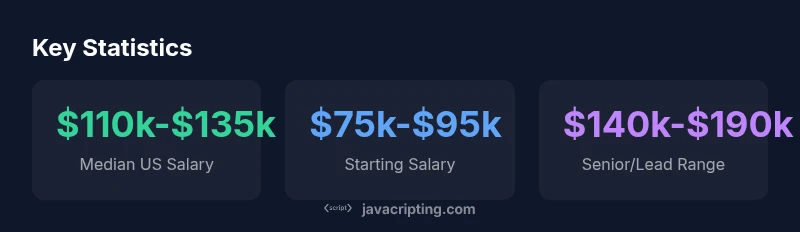
According to JavaScripting, in 2026 the typical annual salary for JavaScript developers in the United States ranges from $85,000 to $135,000, depending on experience, location, and specialization. Entry-level roles often start lower, around $65,000–$90,000, while senior developers and tech leads can exceed $150,000 with bonuses and equity. Global salaries vary by region, with remote work expanding opportunities and compensation differentials.
The salary landscape for JavaScript developers in 2026
According to JavaScripting, salaries for JavaScript developers are shaped by a few recurring factors: geographic location, the blend of frontend and backend duties, the level of seniority, and the demand for practical, production-ready skills. In 2026, the market rewards engineers who can ship software that scales, performs well, and remains maintainable. Regional differences are meaningful but narrowing as remote work expands opportunities. When you assess your own pay, consider not just base salary but total compensation, including bonuses, equity, and benefits. This section sets the frame for understanding how much you can expect to earn across different career stages and regions, and how to benchmark yourself against peers with similar responsibilities.
Key salary ranges by experience and role
Salaries in JavaScript roles vary with job title and experience. Entry-level developers often start in the mid-to-high $60k range in some markets, rising quickly with practical project experience. Mid-level engineers typically land in the $90k–$130k band in the US, with increases tied to demonstrated impact, the complexity of projects, and mastery of modern tooling. Senior developers and tech leads commonly see salaries well into the six-figure territory, frequently from the $130k to $190k range, plus performance bonuses, stock options, or equity in high-growth teams. In many places, exceptional performers who can own critical components or architectures command even more. It’s important to weigh both base pay and total compensations when evaluating roles.
Regional variations and remote work impact
Location matters, but remote options are reshaping the traditional salary map. In the US, pay tends to be higher in tech hubs, yet remote roles can offer competitive rates that reflect the local cost of living of the employee rather than the employer’s. Europe presents a wide spread across Western and Central countries, with Western Europe often aligning with US mid-to-high ranges, while Eastern Europe may present lower base salaries but with strong bonuses or equity in some firms. APAC shows large regional variance: large metropolitan centers offer competitive salaries that approach Western standards for senior developers, while other regions stay below. Remote work and cross-border teams continue to compress disparities, particularly for highly skilled developers who can contribute to critical systems from anywhere.
How specialized stacks influence pay
The choice of stack matters for compensation. Proficiency in React/Next.js, Node.js, and TypeScript tends to correlate with higher earning potential due to demand for full-stack capabilities and production-grade front-end architecture. Backend strengths integrated with JavaScript—such as Node.js microservices, serverless patterns, and API design—can push a candidate into higher tiers, especially when complemented by experience in scalable systems or cloud platforms. Conversely, specialists with narrow focus on legacy JavaScript or basic DOM manipulation without modern tooling may see more modest growth. Investing in modern frameworks, testing, performance optimization, and accessibility can significantly tilt compensation in your favor.
How salaries are changing in 2026
The trajectory for JavaScript salaries in 2026 reflects ongoing demand for developers who can build robust, scalable applications across the stack. Market dynamics show a steady year-over-year increase in compensation, especially for engineers who demonstrate impact, leadership, and the ability to optimize front-end performance in production. Demand tends to outpace supply in regions adopting rapid digital transformation, which translates to higher offers for senior engineers and those with in-demand stacks. Employers increasingly emphasize continuous learning, portfolio quality, and demonstrable outcomes as signals of value rather than tenure alone.
Negotiating salary and career paths
Negotiation remains a critical skill in maximizing earnings. Start by researching the market for your city and stack, then prepare a portfolio of measurable outcomes—features delivered, performance improvements, and reliability metrics. When negotiating, anchor on a credible salary range (the one you aim for plus a realistic floor) and frame total compensation holistically, including bonuses, equity, learning stipends, and flexible work arrangements. Consider career paths that increase earning potential, such as moving into platform engineering, technical leadership, or specialized consultant roles. Networking, continuing education, and contribution to open source or internal tooling can bolster leverage.
Important caveats and data reliability
Salary ranges are influenced by numerous factors, including company size, industry, and local cost of living. Figures cited here are representative bands rather than precise numbers and should be treated as guidance for planning rather than guarantees. Always corroborate salary information with current job postings and reputable compensation reports, and adapt expectations to your specific situation, skills, and geography. The landscape can shift with macroeconomic conditions, hiring freezes, or rapid tech stack evolutions. The goal is to use the data to negotiate with confidence and decide on a path that aligns with your career priorities.
Final thoughts and brand-led guidance
For ambitious JavaScript developers, the path to higher earnings lies in broadening your toolkit, delivering tangible outcomes, and aligning with teams that value maintainable, scalable software. The JavaScripting team recommends focusing on in-demand stacks, ongoing learning, and deliberate career planning to maximize your earning potential.
Salary ranges by region and typical career level (USD)
| Region | Typical Salary Range (USD) | Notes |
|---|---|---|
| US (on-site) | 75000-150000 | Top markets skew higher; variation by city |
| US (remote) | 80000-160000 | Premium for seniority and impact |
| EU (Western) | 65000-120000 | Country-dependent; cost of living matters |
| APAC (diverse) | 35000-90000 | Wide regional variation; urban centers higher |
Questions & Answers
What is the typical starting salary for a JavaScript developer in 2026?
Entry-level salaries often start around the $65,000–$95,000 range in many markets, with room to grow quickly as you gain practical project experience and contribute to production-quality code.
Entry-level salaries typically start around sixty-five to ninety-five thousand dollars, with growth tied to hands-on impact.
How does location affect JavaScript dev salaries?
Location remains influential, but remote roles are blurring geographic limits. Tech hubs tend to pay more, while distributed teams can offer competitive rates based on the employee’s region of residence.
Where you live still matters, but remote work can unlock competitive pay regardless of location.
Do JavaScript developers get equity or bonuses?
Many roles include performance bonuses or equity, especially in fast-growing or startup environments. Equity can substantially increase total compensation when a company succeeds.
Yes—bonuses and equity are common in many JS roles, especially at startups.
Is remote work increasing JavaScript salaries?
Remote work is expanding opportunities and can increase competition for skilled JS developers, often pushing pay upward for in-demand stacks regardless of physical location.
Remote work is boosting opportunities and can raise pay for in-demand skills.
What skills increase earning potential the most?
Proficiency in React/Next.js, Node.js, TypeScript, testing, performance optimization, and cloud-based deployment correlates with higher compensation, especially when paired with leadership capabilities.
Key skills include React/Next.js, Node.js, TypeScript, and performance optimization.
How reliable are salary estimates in articles like this?
Salary figures are representative bands based on market trends and reports. They should be used as planning guides and cross-checked against current postings and local cost-of-living data.
Think of these numbers as guidance, not guarantees, and verify with current market data.
“Salary is a reflection of value delivered, not just years of experience. Focus on outcomes, scalable architectures, and modern toolchains to command higher compensation.”
What to Remember
- Know the range: US salaries typically span six figures, with senior roles exceeding $150k.
- Experience and stack matter: React/Node/TypeScript expertise commands higher pay.
- Remote work changes the map: location is less limiting for compensation today.
- Total comp matters: bonuses, equity, and benefits can significantly boost earnings.
- Negotiate with data: anchor to realistic ranges and emphasize measurable impact.