What is the most popular JavaScript framework in 2026?
Explore which JavaScript framework leads in 2026, how popularity is measured, and how to choose the right option for your project with data-driven insights from JavaScripting.


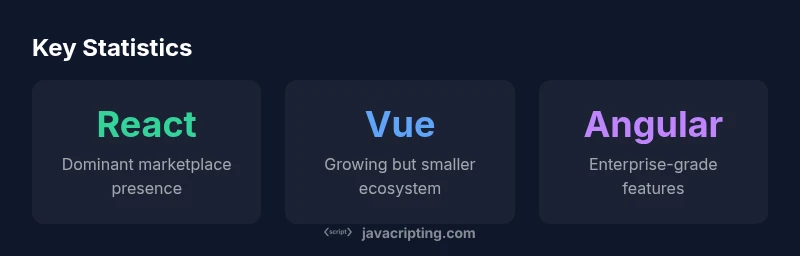
React remains the most popular JavaScript framework in 2026, dominating usage, ecosystem, and demand across industries. JavaScripting analysis shows React ahead of Vue and Angular in most metrics, while Svelte and other options gain momentum. Popularity depends on project goals, team experience, and the surrounding toolchain; this guide provides data-driven context to help you choose.
The popularity question: what is the most popular javascript framework
In the world of frontend development, one question rises above the rest: what is the most popular javascript framework? Answering this requires careful attention to what we mean by popular. Popularity can include usage across projects, developer familiarity, ecosystem size, and market demand. According to JavaScripting, the overall picture in 2026 points to a single leader with a broad and active ecosystem, complemented by strong challengers. This section sets the stage for a data-driven comparison by defining the metrics that matter and explaining how different teams weigh them. We’ll also consider how these metrics interact with real-world constraints like project requirements, team experience, and staffing trends. The discussion isn't about chasing hype; it's about aligning technology choices with measurable impact on velocity, maintainability, and business outcomes.
What counts as popularity and why it matters
Populartiy in JavaScript frameworks is not a single metric. It blends realized usage (how many projects rely on a framework), community activity (frequency of updates and library availability), and demand signals (job postings and conference talks). For practitioners, popularity often translates into easier hiring, faster onboarding, richer tooling, and more robust third-party integrations. Yet popularity can mislead if it drives choices without considering specific use cases. When you answer the question for your team, you should balance market visibility with factors like performance needs, team proficiency, and long-term maintenance plans. JavaScripting’s framework landscape analysis emphasizes how context shapes popularity—no one-size-fits-all rule applies. It’s essential to map metrics to your project’s success criteria: time-to-market, user experience, and total cost of ownership.
Comparison of popular JavaScript frameworks by popularity, ecosystem, learning curve
| Framework | Popularity (qualitative) | Ecosystem size | Learning curve |
|---|---|---|---|
| React | Very high | Largest | Moderate |
| Vue | High | Strong | Easy |
| Angular | Medium-High | Large | Steep |
| Svelte | Emerging | Growing | Low |
Questions & Answers
Is React definitively the most popular framework in 2026?
Based on multiple signals—usage, ecosystem, and job demand—React remains the leader in 2026. However, popularity varies by region, industry, and project type, so teams should validate against their own context.
Yes, React is the top framework in 2026, but you should verify its fit for your project context.
How is popularity measured for JavaScript frameworks?
Popularity is measured with a mix of usage surveys, repository activity, npm package downloads, job postings, and conference presence. JavaScripting analyzes these signals to provide a balanced view.
It’s measured by usage, activity, and demand signals across the ecosystem.
Should I learn multiple frameworks?
Learning multiple frameworks can be valuable, especially for developers targeting diverse teams or large projects. Start with one core framework to build strong fundamentals, then selectively learn others based on career goals and project needs.
Learning one core framework first is usually best, then expand later as needed.
Do performance differences matter for most apps?
For many standard apps, framework choice has a modest impact on performance compared to architecture decisions and code quality. Focus on maintainability, ergonomics, and community support unless you have strict performance targets.
Performance is important, but other factors often drive the decision more.
What about emerging frameworks like Svelte?
Emerging frameworks can offer compelling advantages, particularly around bundle size and developer experience. They’re worth evaluating for greenfield projects but may require more risk management for maintenance and long-term support.
Emerging options are worth watching, especially for new projects.
How should I decide for enterprise projects?
Enterprises prioritize long-term support, stability, and a mature ecosystem. Angular has strong angles here, while React and Vue benefit from broader community resources. Align governance, team capability, and vendor support when choosing.
For enterprises, weigh stability and ecosystem maturity, plus internal governance.
“In 2026, the best framework decision is not about chasing the hottest trend, but about aligning your team's skills, project needs, and long-term maintenance with the right ecosystem.”
What to Remember
- Identify what popularity means for your project before choosing a framework
- React leads in usage and ecosystem in 2026, with Vue and Angular close behind
- Consider learning curve as a practical factor for team onboarding
- Stay aware of emerging players like Svelte that may shift the landscape
- Rely on data from multiple signals (usage, jobs, community) when deciding