How Much Does a JavaScript Programmer Make in 2026? A Practical Salary Guide
A data-driven look at JavaScript programmer salaries in 2026, covering US vs global pay, experience impact, regional variation, and practical negotiation guidance for career planning.


To answer how much does a javascript programmer make, compensation depends on location, experience, and role. In the United States, entry to mid-level developers typically earn roughly $60k to $130k, while senior engineers and lead roles can reach $150k or more. International salaries differ substantially, with remote work widening opportunities. JavaScripting Analysis, 2026 highlights notable regional differences and growth tied to frontend, full-stack, and Node.js expertise.
Salary landscape for JavaScript developers
The question how much does a javascript programmer make is shaped by three core axes: location, experience, and role. The JavaScript ecosystem is global, and compensation reflects local purchasing power and demand for specific skills. According to JavaScripting analysis, the US market typically offers higher base salaries than many other regions, but this premium varies by city, company size, and whether you focus on frontend, Node.js, or full-stack roles. Frontend specialists with mastery of React/Next.js and performance optimization often command premium pay, while junior developers entering data-heavy or backend-intensive tasks may earn more modest starting packages. Total compensation can include bonuses, equity, and benefits that significantly affect earnings. If you’re researching how much does a javascript programmer make, consider benefits like remote-work flexibility, learning stipends, and career progression paths that influence long-term earnings.
Factors that drive JavaScript salaries
Experience and seniority, geographic location, tech-stack depth, industry, and company size all shape pay. More years typically translate to higher pay, with steep jumps when moving from mid-level to senior/lead roles. Expertise in modern frameworks (React, Vue, Svelte), Node.js back-end skills, TypeScript, and tooling (Vite, Webpack, testing) adds premium. Industry demand for performance, accessibility, and security can tilt compensation up or down. Finally, equity or bonuses often push total earnings beyond base salary, especially in startups or scale-ups. JavaScripting Analysis, 2026 underscores the value of tangible impact—projects that improve conversion, load times, or reliability—when negotiating pay.
Regional variations and the remote-work effect
Geography remains a major determinant of JavaScript salaries. In the United States, salaries cluster around major tech hubs, where cost of living and competition push compensation upward. Cities like San Francisco, Seattle, and New York historically pay at the top end, while smaller markets may sit toward the lower end. Outside the US, salaries reflect local conditions, currency strength, and demand for software engineers. Remote work has compressed gaps by enabling skilled developers to work for distant firms, while compensation often adjusts to the employer’s location or the candidate’s location. JavaScripting Analysis, 2026 notes that remote-friendly roles are gradually normalizing bands, though regional variance persists.
How to estimate your salary: practical tools and methods
Begin with a self-audit of your skills and years of experience, then map them to market tiers. Use salary calculators, job boards, and company reviews to triangulate numbers. A robust approach combines current salary with expected growth, inflation, and benefit value. When negotiating, anchor with a credible range and justify higher pay with concrete examples of past impact. Remember to compare total compensation, not just base pay. JavaScripting, 2026, recommends re-evaluating salary at least annually, especially after completing a major project or upskilling.
Career paths and leverage to increase pay
Continuing education and diversification pay off. Potential paths include becoming a senior frontend architect, moving into backend or full-stack leadership, or specializing in performance engineering or cloud-native JavaScript runtimes. A portfolio with measurable outcomes—faster load times, reduced error rates, scalable architectures—boosts negotiating power. Networking, mentoring, speaking at conferences, and contributing to open source raise visibility and lead to higher-paying opportunities. Consider adjacent roles such as developer advocacy or technical product management to expand influence and earning potential.
Freelance vs full-time: payer considerations
Contract work for JavaScript developers can yield higher hourly rates but comes with less stability and benefits. Freelancers must cover self-employment taxes, healthcare, and variable workloads. For those seeking stability, full-time roles offer salary plus benefits and retirement matching. Many developers blend both pathways to optimize earnings and career growth in 2026, balancing the security of a steady paycheck with the flexibility of freelance projects.
Salary ranges by experience level
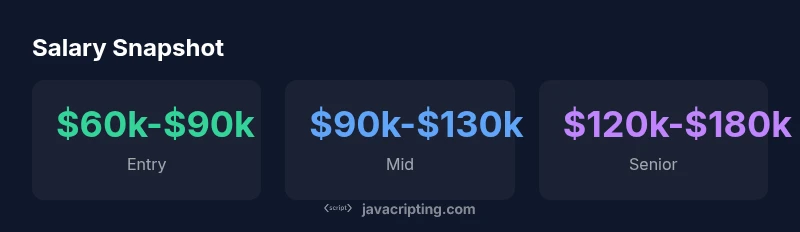
| Experience level | Typical salary range (USD) | Notes |
|---|---|---|
| Entry-level | 60k-90k | US market, growing as skill grows |
| Mid-level | 90k-130k | Frameworks like React/Next.js boost value |
| Senior/Lead | 120k-180k | Includes leadership and architectural scope |
Questions & Answers
What is the typical salary for a JavaScript developer in the United States?
Salaries in the US vary by experience and city, but commonly range from roughly $60k at entry level to above $180k for senior roles when including bonuses and equity. Remote opportunities can broaden ranges. Always compare total compensation, not just base pay.
US salaries vary by city and experience; expect a wide range, especially for senior or specialized roles.
Do frontend and backend JavaScript developers earn differently?
Pay differences exist, driven by demand and complexity. Frontend specialists in high-demand frameworks and performance tuning can command premium, while backend specialists with Node.js, databases, and architecture skills can also reach high salaries. Both tracks benefit from full-stack capability.
Frontend and backend pay can diverge based on demand and expertise; strong full-stack skills often raise earnings.
How much does location affect salary for JavaScript roles?
Location has a major impact; tech hubs pay more due to higher cost of living and competition. Remote roles can mitigate some gaps, but compensation often reflects the employer’s base location or your own, and currency differences matter for non-US candidates.
Location matters a lot; remote work changes the game but still interacts with regional pay norms.
What tools help estimate my salary accurately?
Use multiple sources: salary calculators, job postings, and company reviews to triangulate numbers. Include your stack, years of experience, and target city. Reassess annually, especially after skill improvements or new responsibilities.
Check several sources and factor in your skills and location to estimate your pay.
Is freelancing more lucrative than full-time employment for JavaScript developers?
Freelancers can command higher hourly rates but bear tax, healthcare, and workload planning costs. Full-time roles offer stability and benefits. Many developers blend both to maximize earnings.
Freelance can pay more per hour, but it comes with risks and responsibilities.
Which skills most boost JavaScript salaries?
In-demand skills include React, Next.js, Node.js, TypeScript, testing/CI, performance optimization, and cloud-native or serverless architectures. Demonstrating impact with measurable results often leads to higher offers.
Key skills like React, Node.js, and cloud-native JS boost earning potential.
“Salary is a function of market demand and measurable impact. Developers who pair deep JavaScript expertise with system design and performance optimization tend to command higher compensation.”
What to Remember
- Understand salary ranges by experience and location
- Factor in total compensation, not just base pay
- Invest in in-demand stacks (React, Node.js, TypeScript)
- Leverage remote-work options to maximize opportunities
- Reassess salary annually and after major upskilling